Door Frames
Fire Door Stops
Why Fire Door stops are always required to be 25mm and no less?
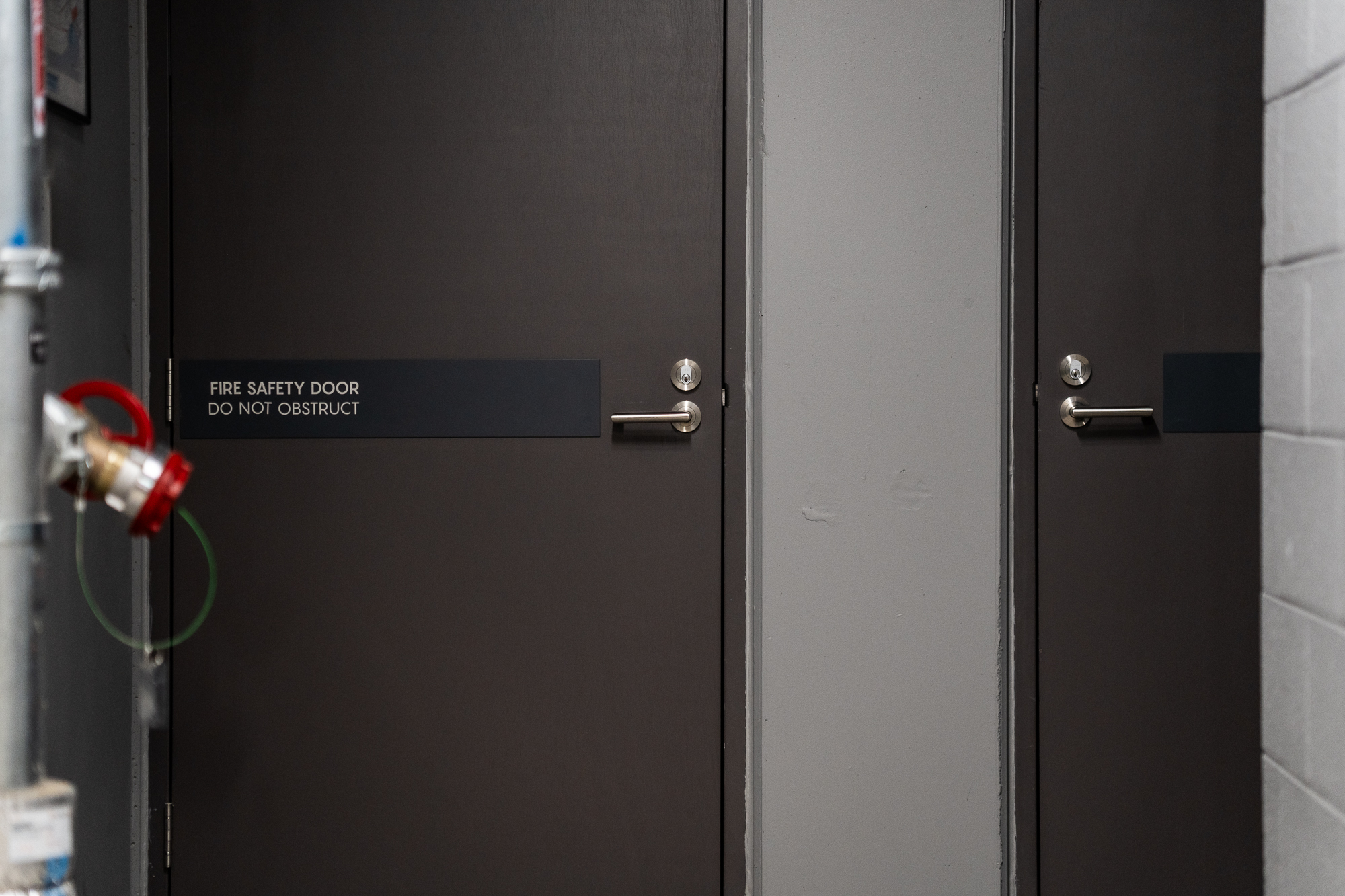
Fire door closer back check is an important setting that is often overlooked, but it plays a major role in how a fire door behaves during daily use and during an emergency evacuation.
When people move quickly through a fire door, especially in a high-traffic evacuation path, the door can be pushed open with significant force. If the door closer’s back check is not correctly calibrated, the door may swing too far, hit surrounding surfaces too hard, or rebound sharply. That rebound, often called bounce back, can create a safety risk for occupants and may also affect the door’s ability to return to the correct closed position.
In simple terms, back check helps control the door in the final part of its opening movement. It is there to slow the door before it reaches its maximum opening arc. Under AS 1905.1-2005 Clause 2.2.5 as referenced in your brief, this function is important because fire doors are not just meant to look compliant, they must operate in a controlled and reliable way when people need them most.
Why bounce back is a problem
A fire door is part of a tested system. Its job is to help protect an opening in a fire-resistant wall so fire and smoke are delayed from spreading. That protection depends on the door operating properly as a complete assembly.
If a closer has little or no effective back check, several problems can occur:
The door may be thrown open too quickly and then recoil. In an evacuation, that can strike a person behind the leaf or disrupt the flow of people moving through the opening. The door can also hit the wall, frame, stop or adjacent hardware with excessive force, causing premature wear or damage.
Bounce back can also interfere with the closing cycle. A door that rebounds awkwardly may not return smoothly into position. On a fire door, that matters. If the leaf does not come back under control, it may fail to close the way it was intended, and that undermines the protective purpose of the doorset.
Why correct adjustment matters
Back check is not meant to act like a door stop, and it should not be adjusted so aggressively that the door becomes difficult to open. Instead, it should be calibrated to provide controlled resistance near the end of the opening swing.
That balance is important.
Too little back check, and the door can fly open and bounce. Too much, and users may need to force the door harder than they should, which can place stress on the closer, hinges, frame and fixings. In both cases, the door is not operating as intended.
This is especially important in buildings where emergency egress routes may experience sudden crowd movement, such as apartments, commercial buildings, schools, health settings and public access areas. A well-adjusted closer supports safe movement while also helping preserve the condition and performance of the fire door assembly over time.
Fire doors are tested as complete systems
One of the most important compliance principles is that fire doors are tested and approved as complete assemblies. That includes the leaf, frame, hardware and how those parts work together. Your project guidance rightly emphasises explaining that compliance is about the full system, not a single isolated component.
So even though back check is an adjustment within the door closer, its effect is broader than convenience. If poor adjustment contributes to impact damage, loose hardware, misalignment or unreliable closing behaviour, the performance of the overall doorset can be compromised.