Fire Safety Doors

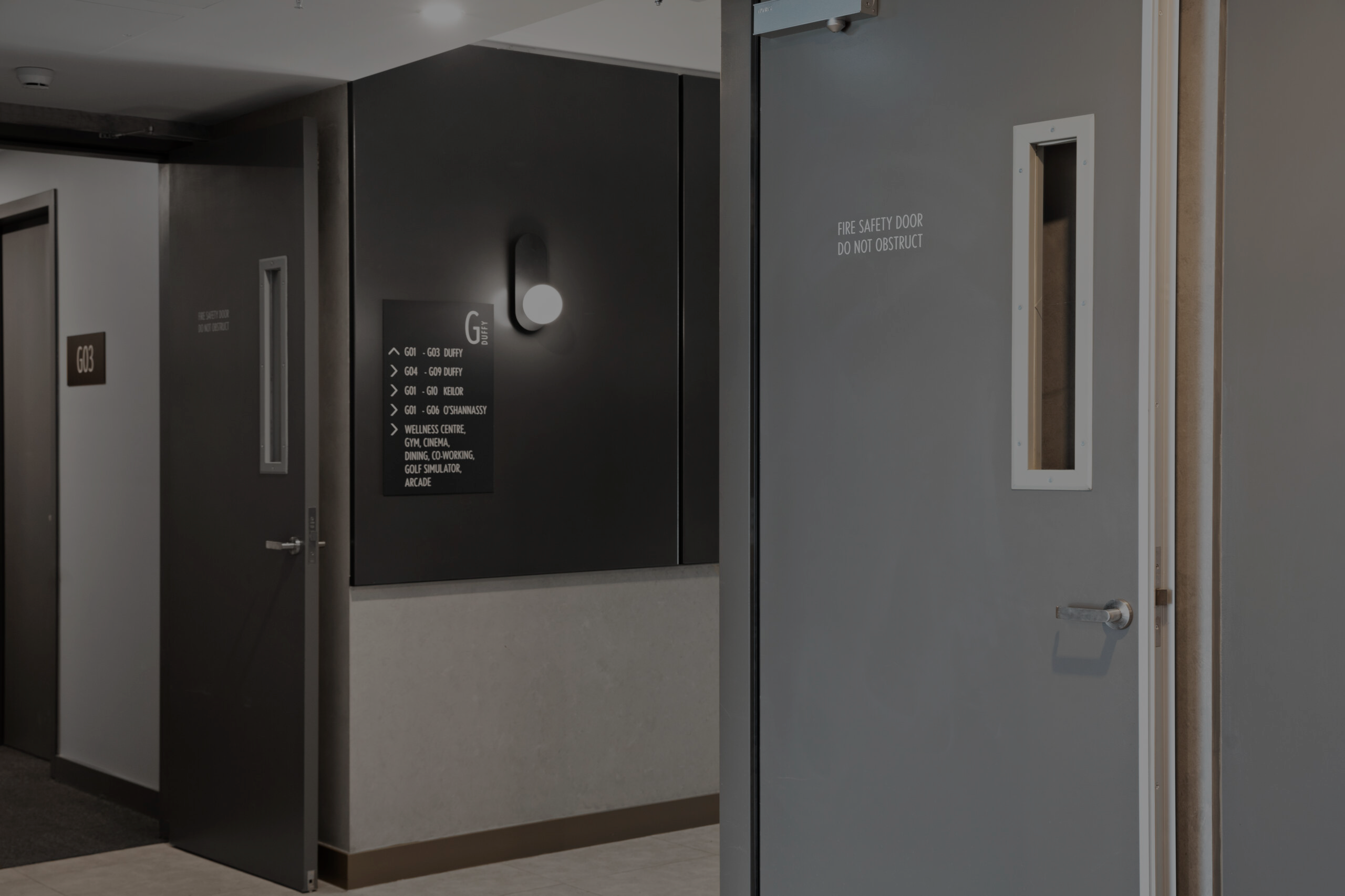
Fire door latching hardware is one of the most important parts of a compliant fire door assembly. If the latch, bolt or securing mechanism does not work properly, the door may not stay closed when it is needed most.
That matters because fire doors are not just barriers. They are tested and approved as complete systems designed to slow the spread of fire, smoke and hot gases. For that system to perform as intended, the leaf must close fully and remain secured in the closed position.
Put simply, if the door does not latch, it cannot be relied on to protect people and property.
A fire door is only effective when it is closed and held closed. In normal day-to-day use, a defective latch may not seem urgent. The door may appear shut, and occupants may assume it is doing its job.
But appearance can be misleading.
If latching hardware fails to engage, the door can sit slightly ajar, drift open, or fail under fire conditions. Once that happens, the barrier between compartments is weakened. Smoke and heat can move earlier and faster than intended, reducing the level of protection the doorset was meant to provide.
This is why latching hardware should never be treated as a minor accessory. It is a functional part of the tested assembly.
AS 1905.1 requires fire-resistant doorsets to be installed as complete assemblies, not as a mix of random components. That includes the hardware used to secure the leaf in position.
Where approved latching hardware is missing, damaged, substituted, loose or not working correctly, the doorset may no longer reflect the system that was originally tested and approved. In practical terms, that creates uncertainty around how the door will perform in a fire.
This is especially important when hardware is replaced with products that may look similar but are not part of the approved arrangement. A latch is not compliant simply because it fits the door or seems to hold it shut in everyday use.
Depending on the tested fire door configuration, compliant latching hardware may include:
Each of these has a specific role. Their purpose is to help ensure the door closes properly and remains secured in the position it was designed to maintain during a fire event.
The important point is not simply what type of latch is installed, but whether it is the correct hardware for that doorset and whether it is operating properly.
Latching issues are often more serious on double fire doors, because both leaves need to work together.
On many double fire door assemblies, the inactive leaf is secured using auto-flush bolts or another approved automatic securing method. If the inactive leaf is not properly held in place, the active leaf may not align, close or latch as intended.
That means a fault on one leaf can affect the performance of the whole doorset.
This is one of the reasons double fire doors should never be treated as though only the active leaf matters. If either leaf is not secured correctly, the integrity of the opening can be compromised.