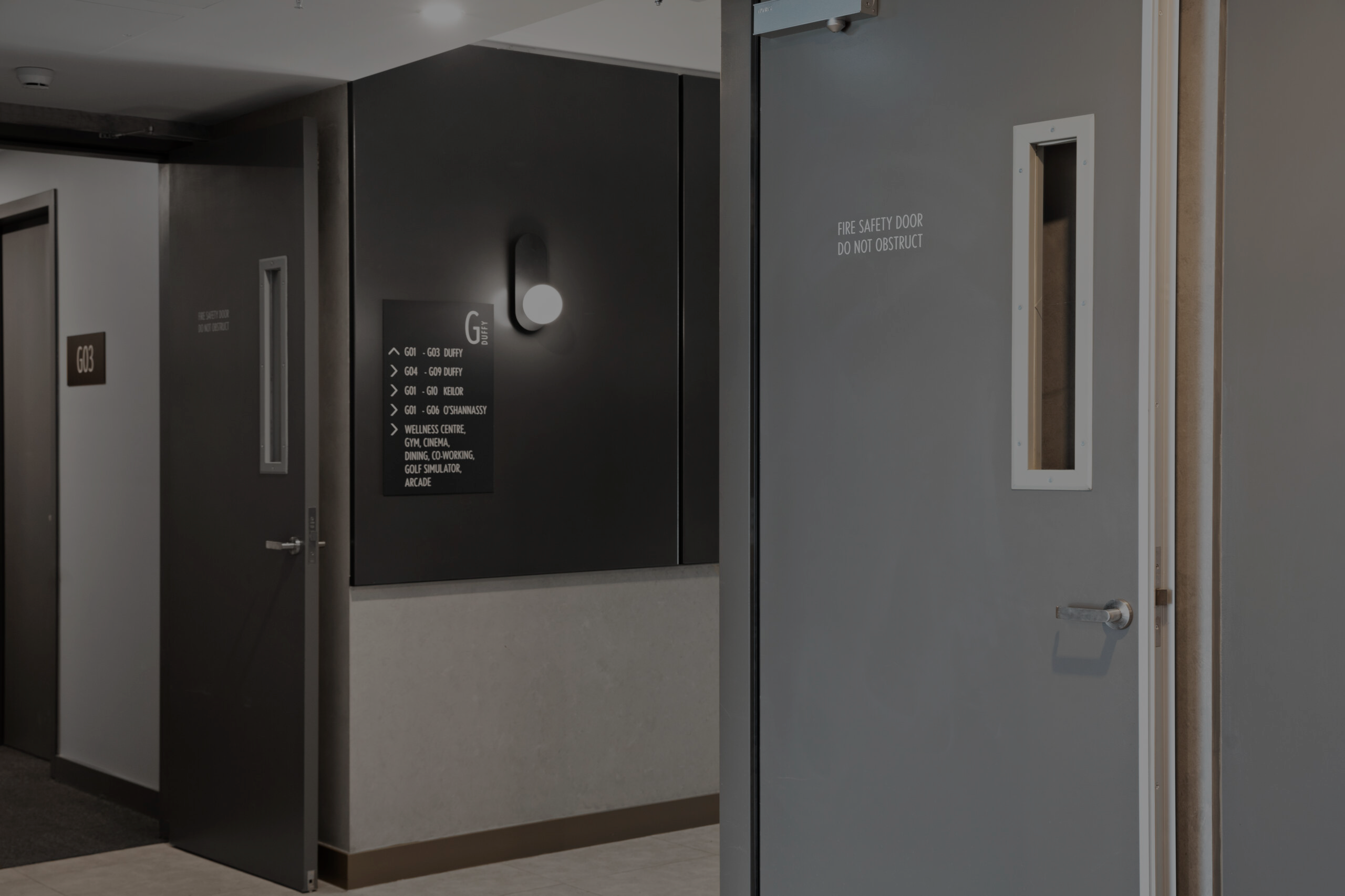
Fire Safety Doors
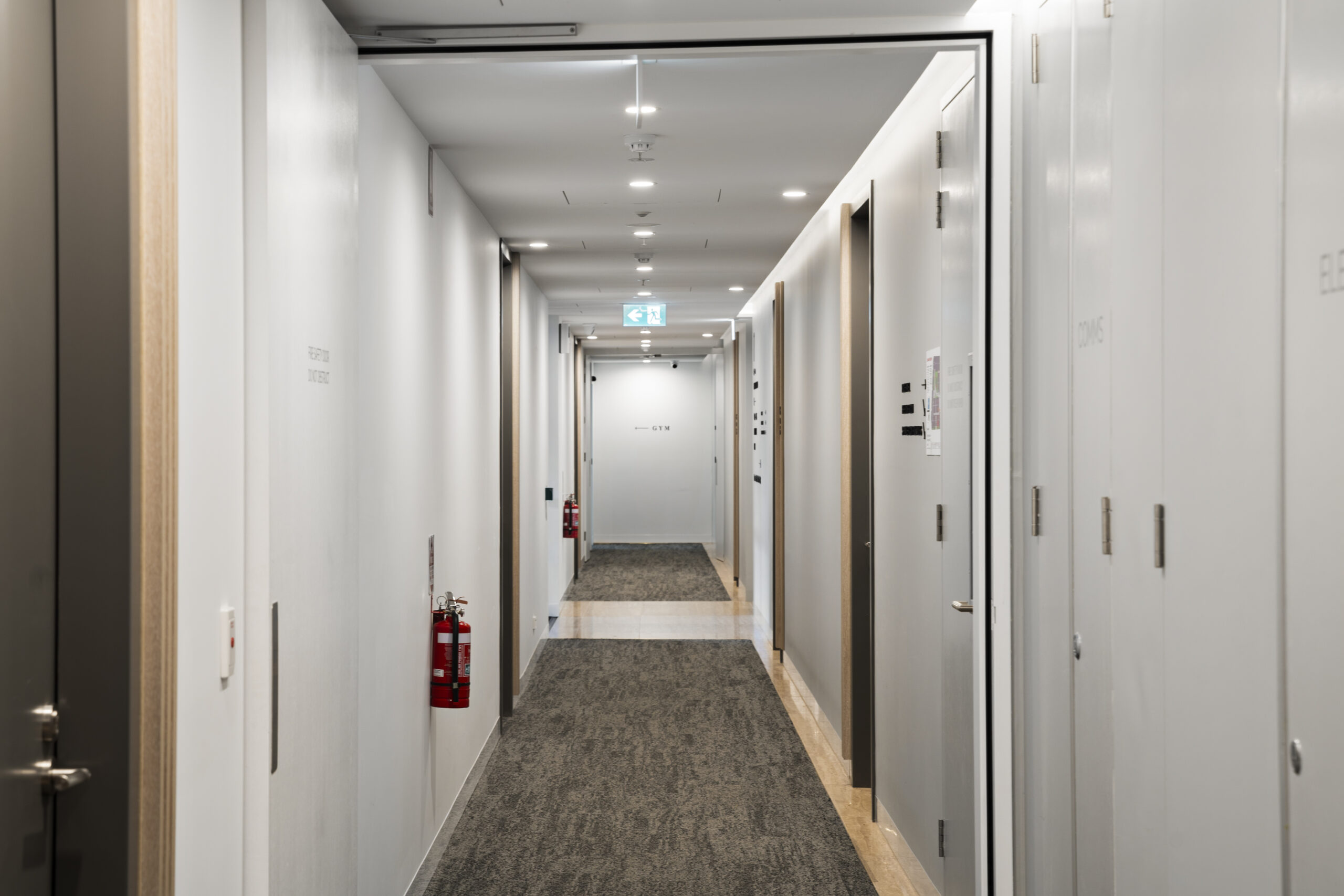
Fire Door latching speed is one of the most important parts of how a fire safety door performs in a real emergency. A fire door may appear compliant at a glance, but if it does not close fully and latch securely every time, it may not provide the protection the building relies on.
That is why correct closing and latching speed matters. It is not just a maintenance detail or a minor adjustment. It is a key part of whether the door can help contain fire and smoke, protect escape paths, and support safer evacuation.
Under the National Construction Code and the requirements for required fire doors, fire doors must comply with AS 1905.1, the Australian Standard for fire-resistant doorsets. The NCC also makes clear that required fire doors are tied to the performance of tested systems, with Specification 12 / S12C2 Fire Doors confirming that required fire doors must comply with AS 1905.1 and that the standard in turn requires testing in accordance with AS 1530.4.
What Fire Door Latching Speed actually means
Many door closers do not shut the door in one single motion. Instead, the closing cycle is split into stages. There is the main closing sweep for most of the swing, then a final stage where the door moves through the last few degrees and the latch engages with the strike.
That final movement is critical. If the door slows too much near the frame, the latch may not engage properly. The door can look closed while not actually being secured. In practice, that means the door may sit slightly ajar or fail to resist pressure changes during an emergency.
In simple terms, a fire door is not doing its job properly unless it closes and stays shut. The point of Fire Door Latching is not simply that the door reaches the frame. It must positively latch without someone having to pull it shut behind them. That practical outcome sits behind the NCC requirement for required fire doors to comply with AS 1905.1.
Why correct latching speed matters
Fire doors are part of a building’s passive fire protection system. Their role is to help limit the spread of fire, smoke and hot gases from one compartment to another. If a door fails to latch, that protection can be reduced at the exact time it is needed most.
A door that is only “almost shut” is not the same as a door that is positively latched. Even a small failure at the final stage of closing can leave the opening more vulnerable to smoke spread, pressure differences, occupant movement or general building conditions during a fire.
This is especially important in areas such as stairwells, service corridors and other parts of a building where airflow or pressure can affect how a door closes. In those conditions, the closer must have enough controlled force in the final part of the swing to ensure reliable Fire Door Latching every time. That is one reason fire door compliance is about real-world function, not just appearance.
When the adjustment is wrong
If a fire door latching speed is too soft, the door can lose momentum before the latch reaches the strike. That often leads to incomplete closure, unreliable engagement or doors that appear shut but are not truly secure.
If it is set too aggressively, the result can be just as problematic. A door that slams may create wear on hardware, put stress on the leaf and frame, affect user safety, or create bounce at the point of closure.
The aim is not to make the door close harder. The aim is to make it close properly. Good Fire Door Latching should be controlled, consistent and repeatable. The door should shut under its own operation and engage the latch cleanly from normal use positions.
It is not always just the closer
A common mistake is to assume poor latching is only a door closer issue. In reality, Fire Door Latching depends on the full doorset working together.
If hinges are worn, loose or misaligned, the door may not swing freely. If the latch bolt and strike are not lined up correctly, the latch may not engage even if the closer is working. If the leaf is dragging, binding, twisted or affected by excessive friction, the final latching action can be compromised.
That is an important point for owners and managers. A fire doorset is a tested assembly, not a collection of unrelated parts. The NCC guidance to required fire doors points back to AS 1905.1 as the governing construction standard, which is why changes in operation should be treated seriously rather than dismissed as a simple nuisance.
Common misconceptions
One of the biggest misconceptions is that the door is fine as long as it closes eventually. That is not a reliable benchmark. A compliant fire door needs dependable self-closing and self-latching performance in normal operation.
Another misconception is that faster always means safer. It does not. A harshly closing door is not necessarily a better-performing door. Reliable Fire Door Latching comes from correct adjustment, suitable hardware, proper installation and ongoing maintenance.
There is also the everyday habit of ignoring a door that does not latch unless someone gives it a final pull. That should never be normalised. If manual help is needed, the door is not operating as intended.
What good Fire Door Latching looks like
A properly functioning fire safety door should close and latch from a fully open position, from partially open, and from the final few degrees before the frame. It should do this without manual assistance.
The movement should be controlled. The door should not drag, hesitate, rebound or stall short of the latch point. The latch should engage cleanly and the leaf should sit properly in the frame once closed.
That kind of performance matters because it supports more than compliance. It supports confidence. People responsible for buildings need to know the door will perform when it matters, not just appear acceptable during a quick glance.
Why ongoing checks are important
Even when a fire door is working properly today, that does not mean it will stay that way.
Hardware wears. Hinges loosen. Frames move. Seals compress. Settings drift. Building conditions change. Over time, all of these can affect Fire Door Latching. That is why small operational issues should be addressed early rather than left to worsen.
A door that fails to latch consistently is not a cosmetic defect. It is a warning sign that the doorset may no longer be operating as intended. Identifying and correcting that issue early is part of protecting people and property properly.
Fire Door Latching is not a minor detail. It is central to whether a fire safety door can do its job.
A fire door should self-close and self-latch every time. That depends on the closer, hinges, latch, clearances, alignment and surrounding conditions all working together correctly. When they do, the result is simple but critical: the door closes, the latch engages, and the opening remains protected.
That is what fire doors are there to do, and why correct latching speed should never be overlooked.