Fire Safety Doors
Smoke Seals
Outline the ferocity of smoke in a building that is unprotected with appropriate smoke separation.
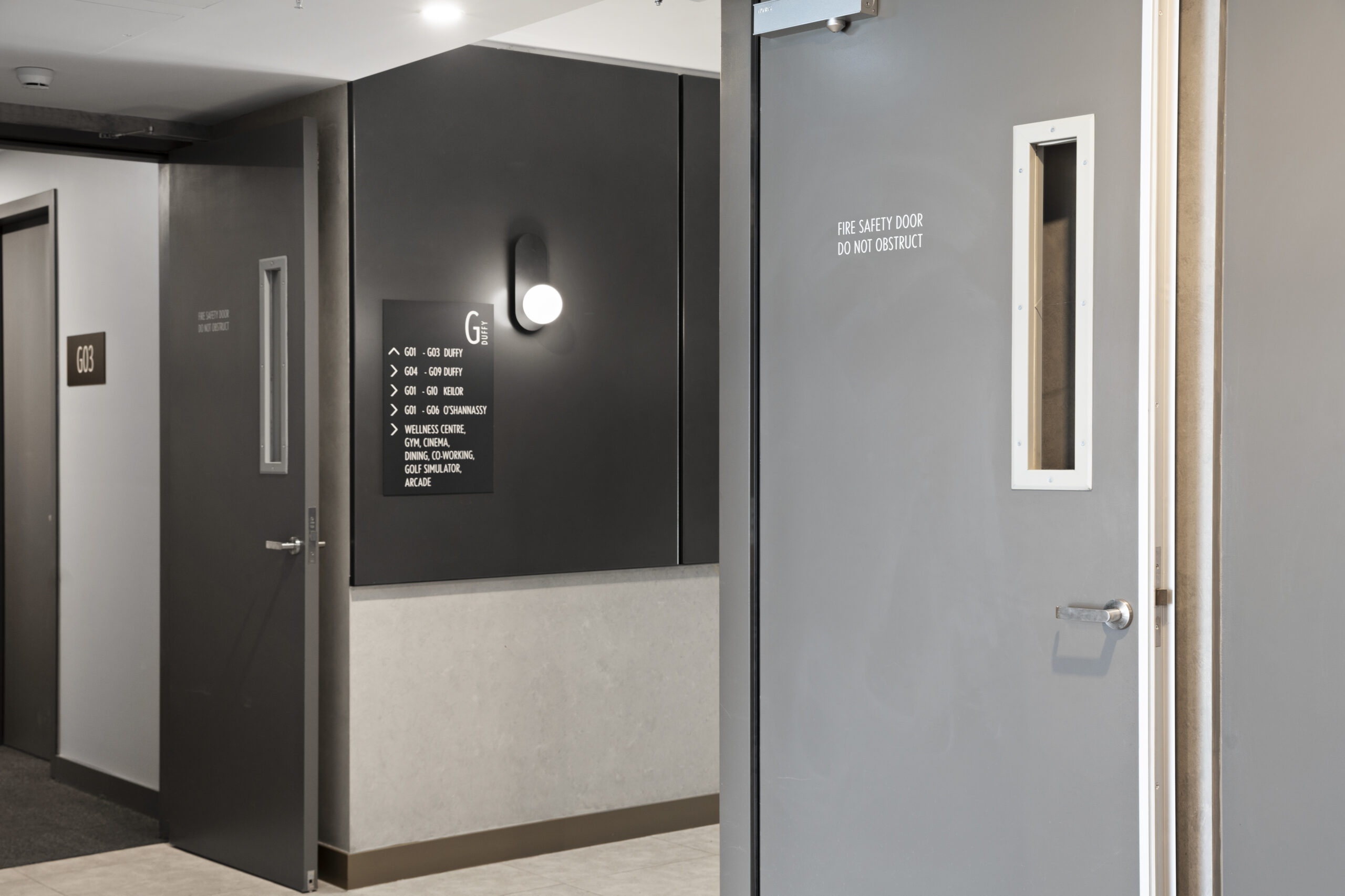
A fire door stop might look like a small part of a door frame, but it plays a very important role in how a fire door performs.
For many people, a fire door is simply a door that closes and latches. In reality, it is a tested fire-resisting system made up of multiple parts working together. The leaf, frame, hardware, clearances, seals and supporting construction all contribute to whether that door can perform as intended during a fire. The fire door stop is part of that system.
In simple terms, the fire door stop is the section of the frame that the door leaf closes against. It helps position the door correctly when shut, but more importantly, it contributes to the overlap and protection needed for the door assembly to achieve its tested fire resistance. That means this is not just a framing detail. It is a compliance and life-safety detail.
The stop is the raised section built into the door frame on the head and jambs. When the door closes, the leaf comes to rest against it. On a standard non-fire-rated door, the stop mostly helps control the closed position of the door and supports latching.
On a fire door, the role is more critical.
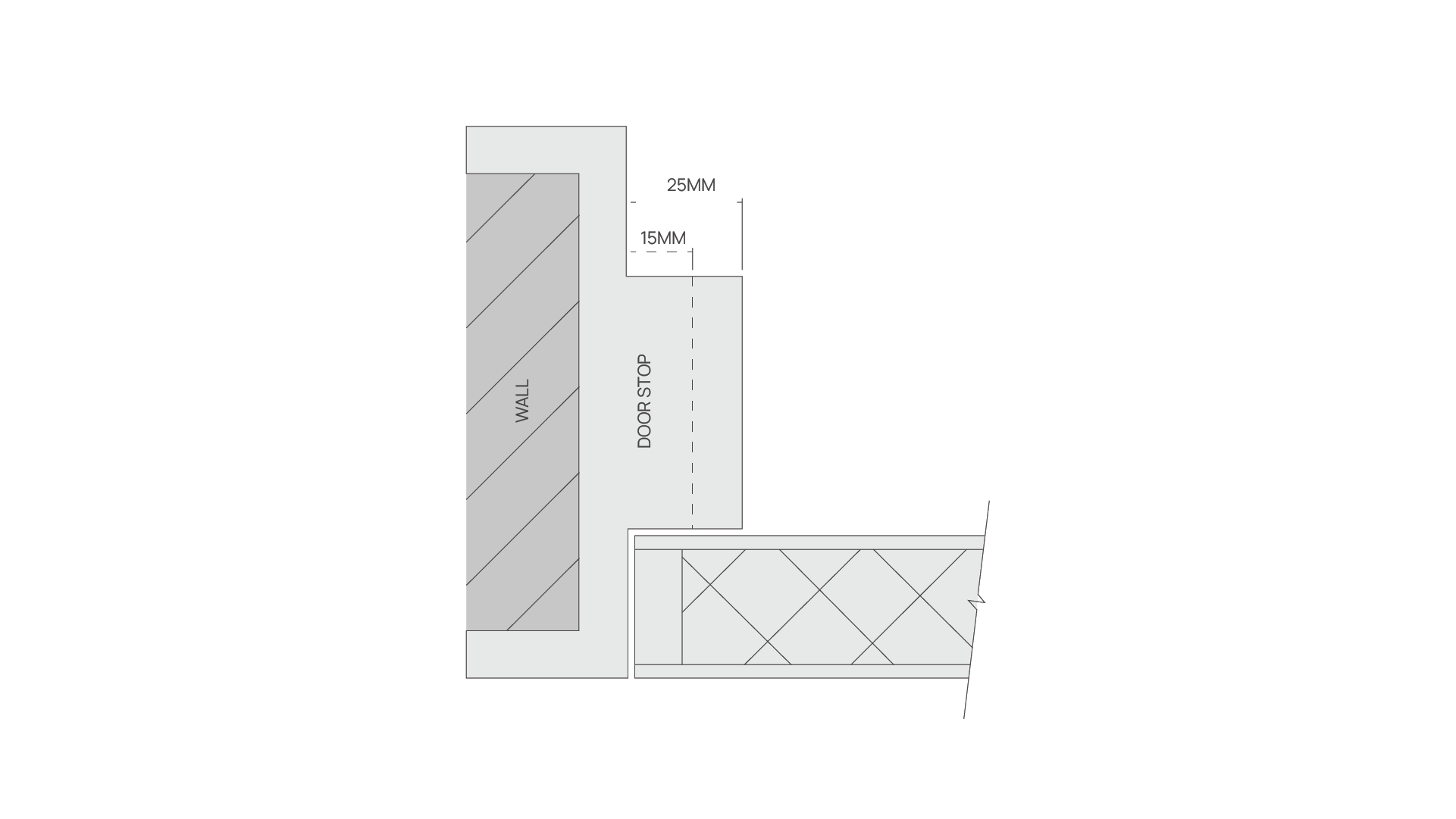
The fire door stop helps create the closing geometry the tested assembly relies on. It supports the intended edge relationship between the leaf and frame, helps maintain the protective overlap, and reduces the chance of early fire passage at the perimeter of the door. If that relationship changes too much, the way the assembly behaves under fire conditions can also change.
Why the size of the stop matters
One of the most common misunderstandings is that if a fire door shuts properly, then the frame details must be acceptable. That is not necessarily true.
A compliant fire door assembly is not judged only by whether it opens and closes. It must also reflect the construction and installation conditions under which it was tested and approved. The live source article correctly points out that while Australian Standards address installation, operation and testing, they do not simply give one universal stop dimension that applies to every fire door on the market. Instead, the required detail comes back to the tested system.
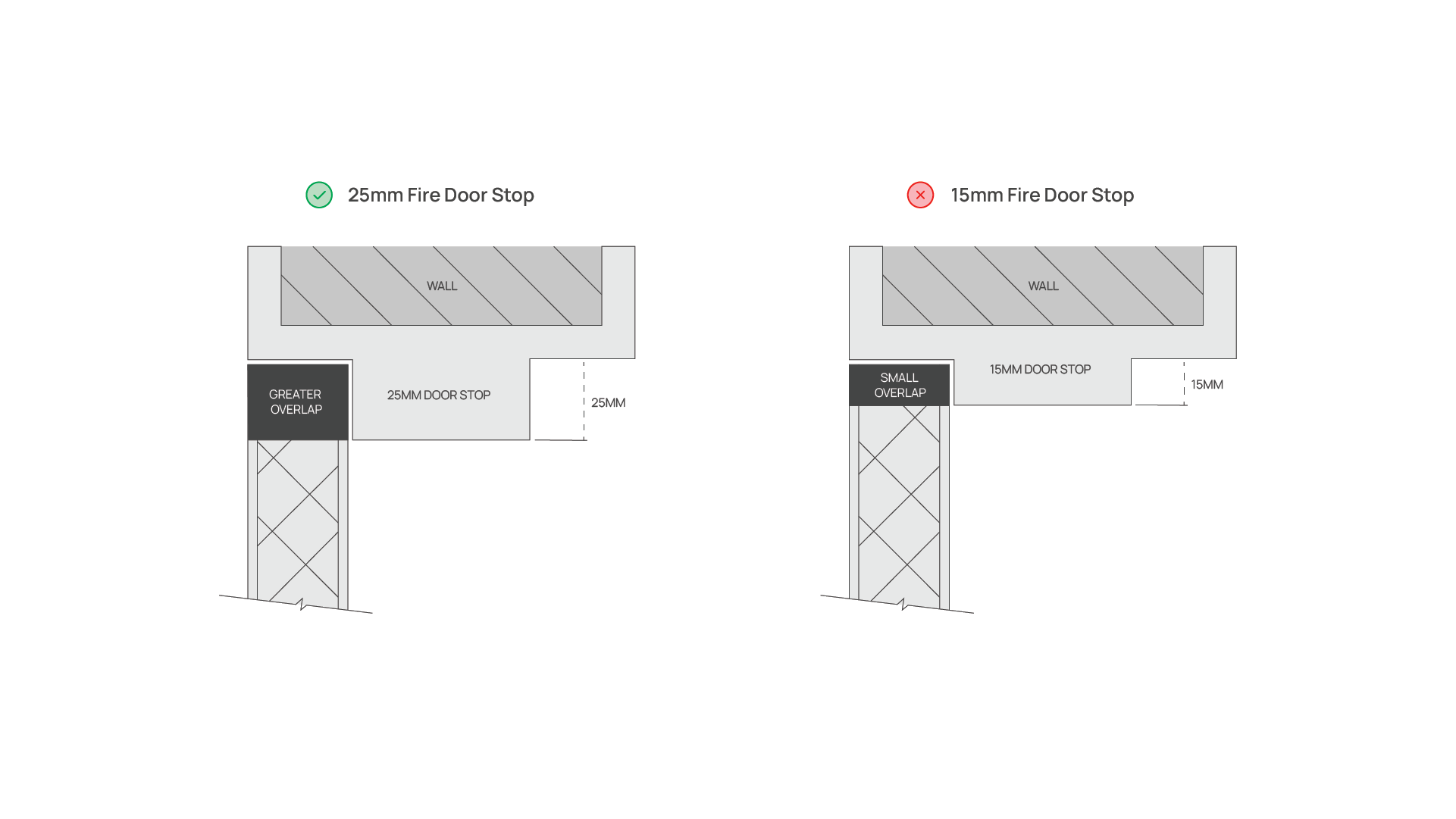
That matters because different manufacturers may have different approved frame profiles, stop sizes, hardware arrangements and installation methods. In practice, many fire door systems use larger steel frame stops than a standard door frame because that added overlap helps protect the edge of the leaf and delay premature failure in a fire. The original article refers to 25 mm stops as a typical tested approach in the market, but the key lesson is not that one size suits all. The lesson is that installers and owners should follow the tested system for the actual product supplied.
What the standards actually require
Under the NCC, required fire doors must comply with the relevant fire door provisions, and in Deemed-to-Satisfy practice this points to AS 1905.1 for fire-resistant doorsets. The NCC also contains specifications for fire doors, smoke doors, fire windows and shutters.
AS 1905.1:2015 sets out requirements for the construction and installation of fire-resistant doorsets used to protect openings in fire-resistant walls.
AS 1530.4:2014 is the fire test standard used for fire-resistance testing of building elements, including systems such as fire doors.
Together, these references explain an important principle: a fire door is not just a door that looks robust. It is a tested assembly. If the frame profile, stop detail, backfilling, hardware, gaps or installation method differ from the tested configuration, there may be no sound basis for assuming the door will still perform to its nominated Fire Resistance Level.
Why assumptions create risk
This is where problems often begin on site.
A standard builder’s frame may look close enough. A smaller stop may still allow the door to close. A replacement frame may appear neat and functional. But fire door compliance is not based on appearances alone.
If the stop is undersized, altered, damaged, or replaced with a frame detail that does not match the tested system, the protective edge relationship around the leaf can be compromised. In a real fire, that can contribute to earlier heat transfer, earlier distortion, or earlier failure than the certified assembly was designed to resist.
This is especially important because many people only notice fire doors when they fail an inspection. By then, the issue is often not just cosmetic rectification. It may require review of the frame type, certification pathway, manufacturer evidence and installation method. That can turn what seemed like a minor framing detail into a far more expensive defect.
The practical takeaway for owners and managers
If you are responsible for a building, the safest approach is not to guess the required stop size or assume all fire door frames are interchangeable.
Instead, confirm:
This is also why manufacturer instructions matter so much. The source article makes the point well: each product can have its own installation requirements, and those should be confirmed directly with the distributor or manufacturer rather than assumed from another door or another site.
A common misconception
A common misconception is: “If the fire door latches, the frame must be fine.”
That is not a safe assumption.
A door can latch and still be non-compliant if the frame profile is wrong, the stop detail is not as tested, the gaps are outside tolerance, or the supporting construction does not match the approved installation. Fire door compliance is about tested performance, not just basic operation.
Why this matters in real buildings
Fire doors are there to protect openings in fire-resisting walls. The NCC recognises that openings such as doors need to be protected to reduce the risk of fire spread within or between parts of a building.
That is why even relatively small details like a fire door stop matter. When the system is right, it helps the door perform as tested. When it is wrong, the door assembly may not provide the protection people assume it will.
In other words, a fire door stop is not just there to stop the leaf. It helps preserve the integrity of a certified fire door system.
A fire door stop may be one of the less noticed parts of a fire door frame, but it should never be treated as incidental. Its dimensions and profile contribute to how the door assembly closes, overlaps, and performs under fire conditions. Because fire doors are tested as complete systems, frame details should always follow the tested manufacturer evidence and the relevant requirements of AS 1905.1, AS 1530.4 and the NCC Section C4.