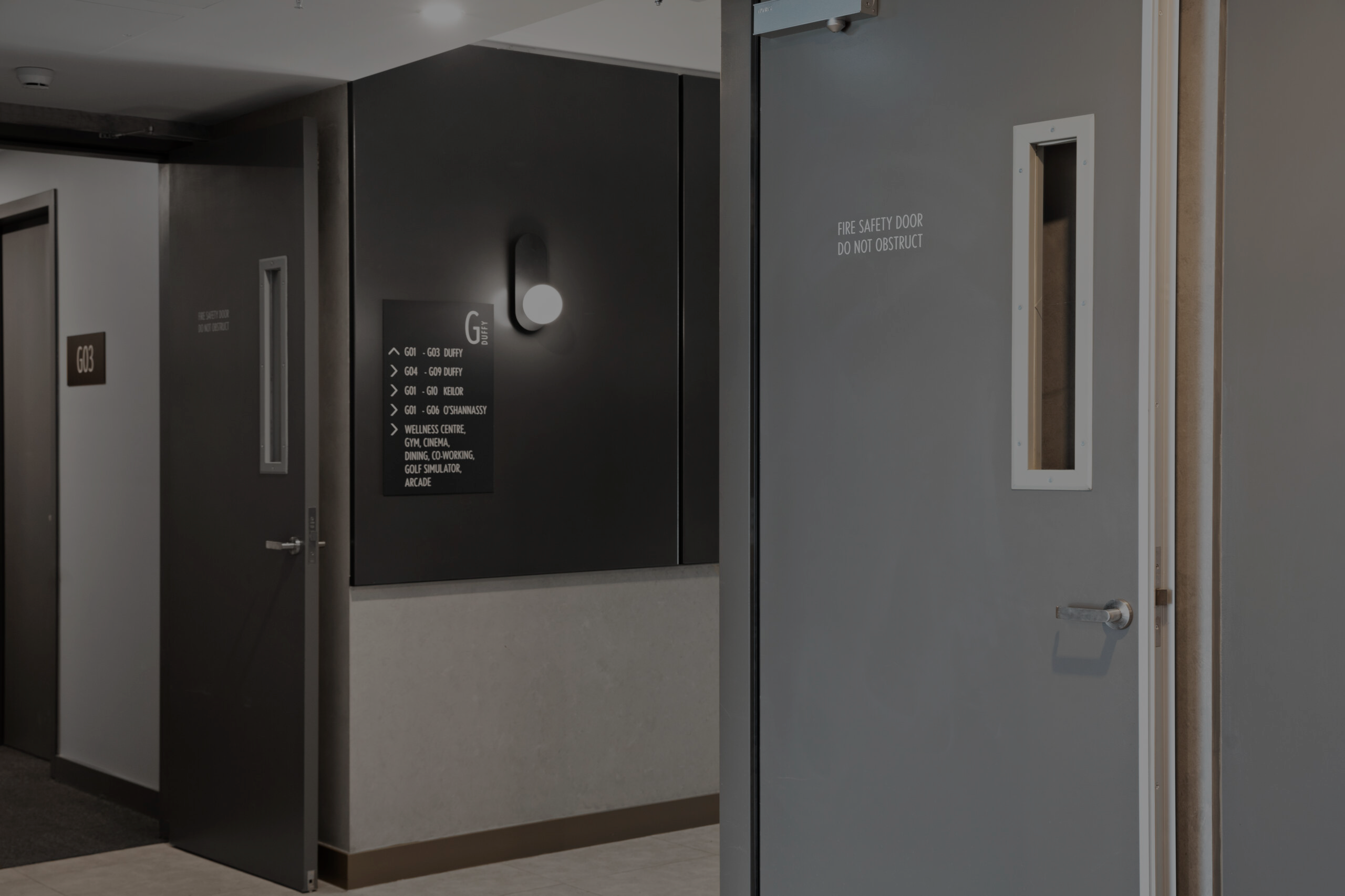
Fire Safety Doors
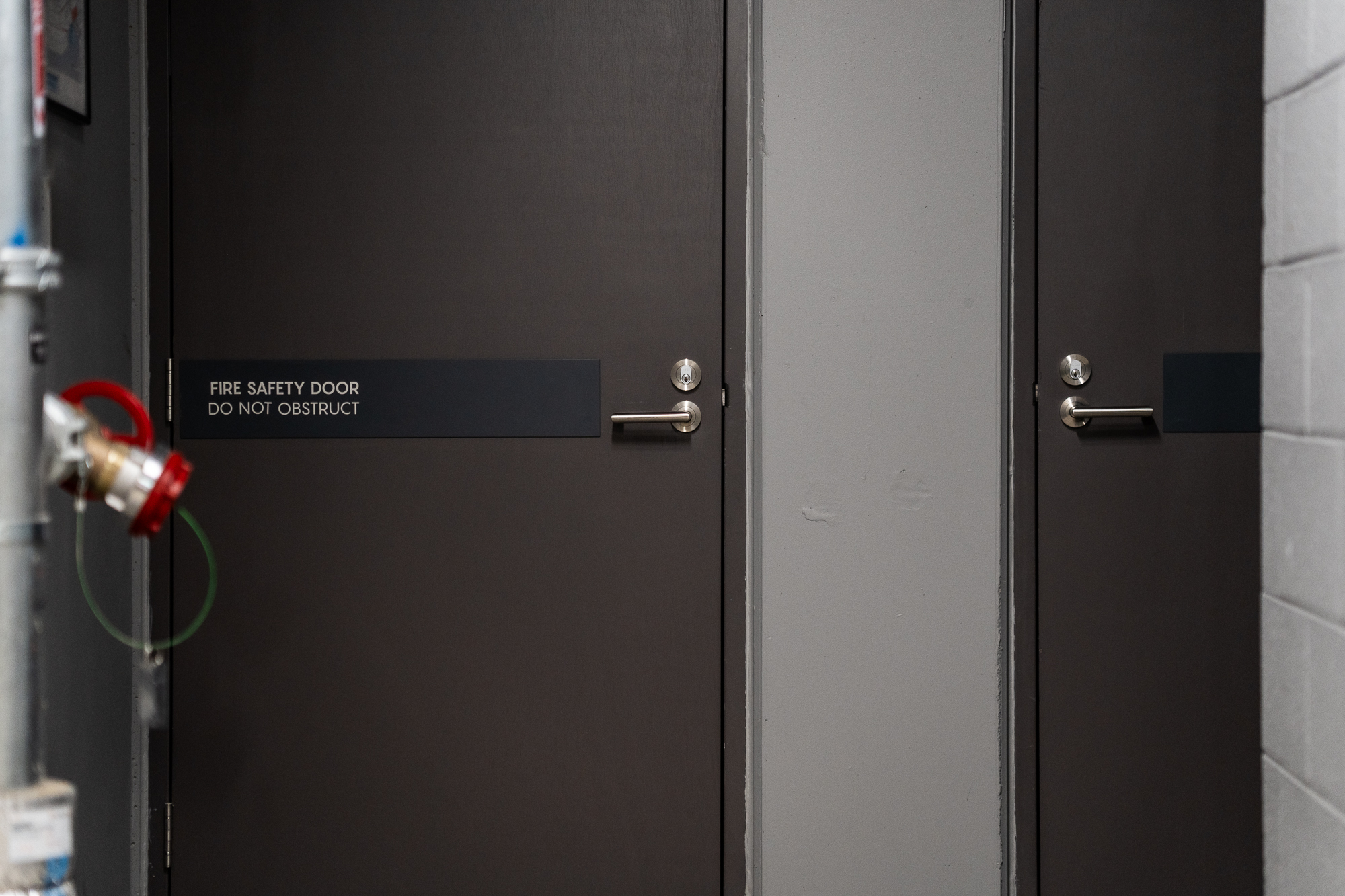
Fire doors held open improperly are one of the most common issues found in buildings. It often looks harmless: a wedge at the base of the leaf, a loose door stop, or a mechanical device keeping the door open for convenience. But when a fire or smoke door is prevented from closing, it may no longer do the very job it was installed to do.
That matters because fire and smoke doors are not ordinary doors. They are part of a building’s life safety system. Their purpose is to help slow the spread of fire and smoke, protect escape paths, and give occupants more time to leave safely. Sentry’s brand position and project brief both emphasise simplifying complex compliance issues so people can understand what matters and act on it confidently.
Under the NCC 2022, a required fire door must comply with AS 1905.1, and the NCC’s fire-resistance provisions are aimed at reducing the risk of fire spread through openings in buildings. AS 1905.1 itself is the current Australian Standard covering the construction and installation of fire-resistant doorsets, including self-closure, self-latching, hardware selection and sensing devices.
In simple terms, if a fire door is required to close in an emergency, it cannot be held open in a way that stops that from happening.
Why holding a fire door open is such a serious problem
When a compliant fire or smoke door closes properly, it helps maintain the separation between spaces. That separation is what limits the movement of flames, heat and smoke from one compartment to another. This is especially important around corridors, stairwells and other exit paths where occupants may need to pass during an evacuation.
Once a fire door is wedged open, that protective barrier is lost. Smoke and hot gases can move far more quickly through the opening. In many emergency events, smoke spread is the more immediate danger to occupants than flames themselves. A door that stays open can therefore undermine both compartmentation and safe egress.
This is also why convenience is never a valid reason to defeat the door’s function. Heavy traffic, ventilation, moving goods, or making access easier may explain why people do it, but they do not make it compliant.
What compliance actually requires
The NCC states that required fire doors must comply with AS 1905.1. In turn, AS 1905.1 includes design requirements for self-closure and self-latching, reflecting the principle that a fire doorset has to operate as a complete tested system.
That means the door must be able to return to its closed position and latch when required. If a device, obstruction or unauthorised modification prevents that, the installation may no longer reflect the tested and compliant doorset.
A compliant hold-open arrangement is therefore not just “something that keeps the door open neatly.” It must be part of a system that releases automatically under fire conditions so the door can close and perform as intended.
When can a fire door be held open?
A fire or smoke door can only be held open where the hold-open function is part of a compliant system that automatically releases on alarm or detection. In practice, this usually means an electromagnetic hold-open device connected to the building’s fire alarm or smoke detection system.
In normal operation, the magnet holds the door open for convenience, access or circulation. If the fire alarm activates, or if the relevant detection system operates, power to the magnet is cut. The door closer then takes over, allowing the leaf to shut and latch.
That is the key difference between a compliant and non-compliant setup.
A wedge, hook, loose stop or stand-alone mechanical catch may keep the door open, but it does not fail safe. It relies on someone noticing an emergency and acting in time. Compliance does not work on that assumption, because emergency systems are meant to protect occupants without depending on human intervention.
Common examples of non-compliance
The most common examples include:
Each of these can create the same end result: the door does not return to its protective position when needed.
Common misconceptions
One common misconception is that sprinklers make an open fire door less important. They do not. Sprinklers and fire doors perform different functions. Sprinklers help suppress or control fire growth, while fire and smoke doors help contain spread and protect paths of travel. Both systems matter.
Another misconception is that it is acceptable if the door is only propped open during business hours. Fire events are unpredictable. The compliance question is not whether the intention was reasonable; it is whether the door will close automatically when required.
A third misconception is that access needs justify non-compliant hold-open methods. Accessibility and convenience absolutely matter, but the solution must still be a compliant one. That is why electromagnetic hold-open devices linked to alarm systems exist in the first place.
Why this matters for owners and managers
For building owners, managers and committees, this issue is about more than technical compliance. A non-compliant fire door can expose occupants to avoidable risk, and it can also create downstream problems in audits, essential safety checks, defect notices and insurance discussions.
Just as importantly, it can give people a false sense of security. A door may appear to be present, labelled and in good condition, but if it cannot close and latch in an emergency, its protective value may be compromised.
That is why fire doors should always be viewed as complete systems, not just door leaves on hinges. Their compliance depends on how all parts work together.
The practical takeaway
If a fire or smoke door needs to stay open during normal use, the solution is not a wedge or improvised stop. The solution is a compliant hold-open system that releases automatically on fire alarm or smoke detection so the door can close when it matters.
That approach supports both usability and life safety. It keeps the building functional in day-to-day operation while protecting people and property when conditions change.
In a regulated industry, the details matter. But the principle here is simple: if a fire door cannot close when needed, it cannot do the job it was installed to do. That is why getting hold-open arrangements right is not just best practice. It is essential.