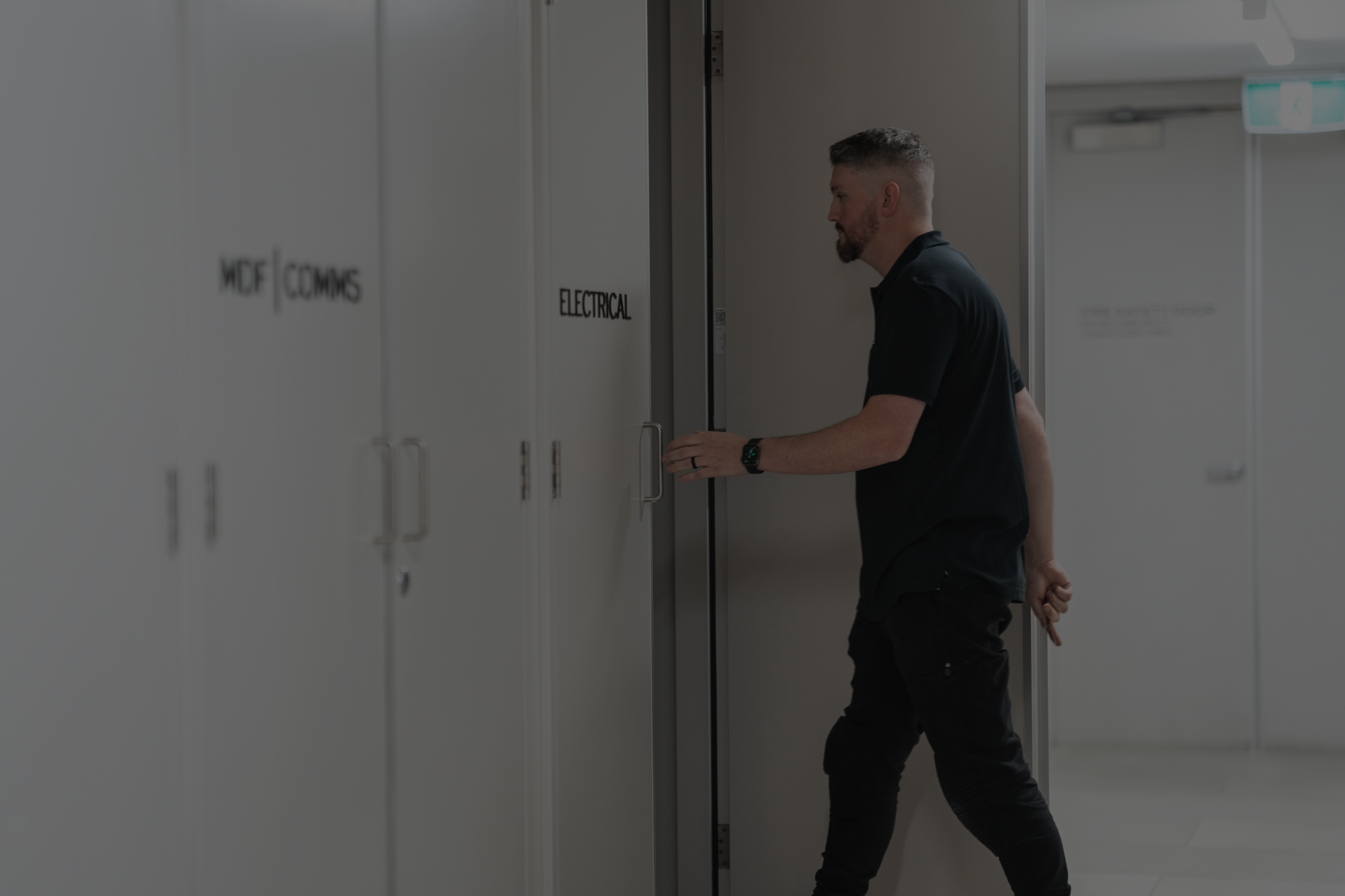
Fire Safety Doors
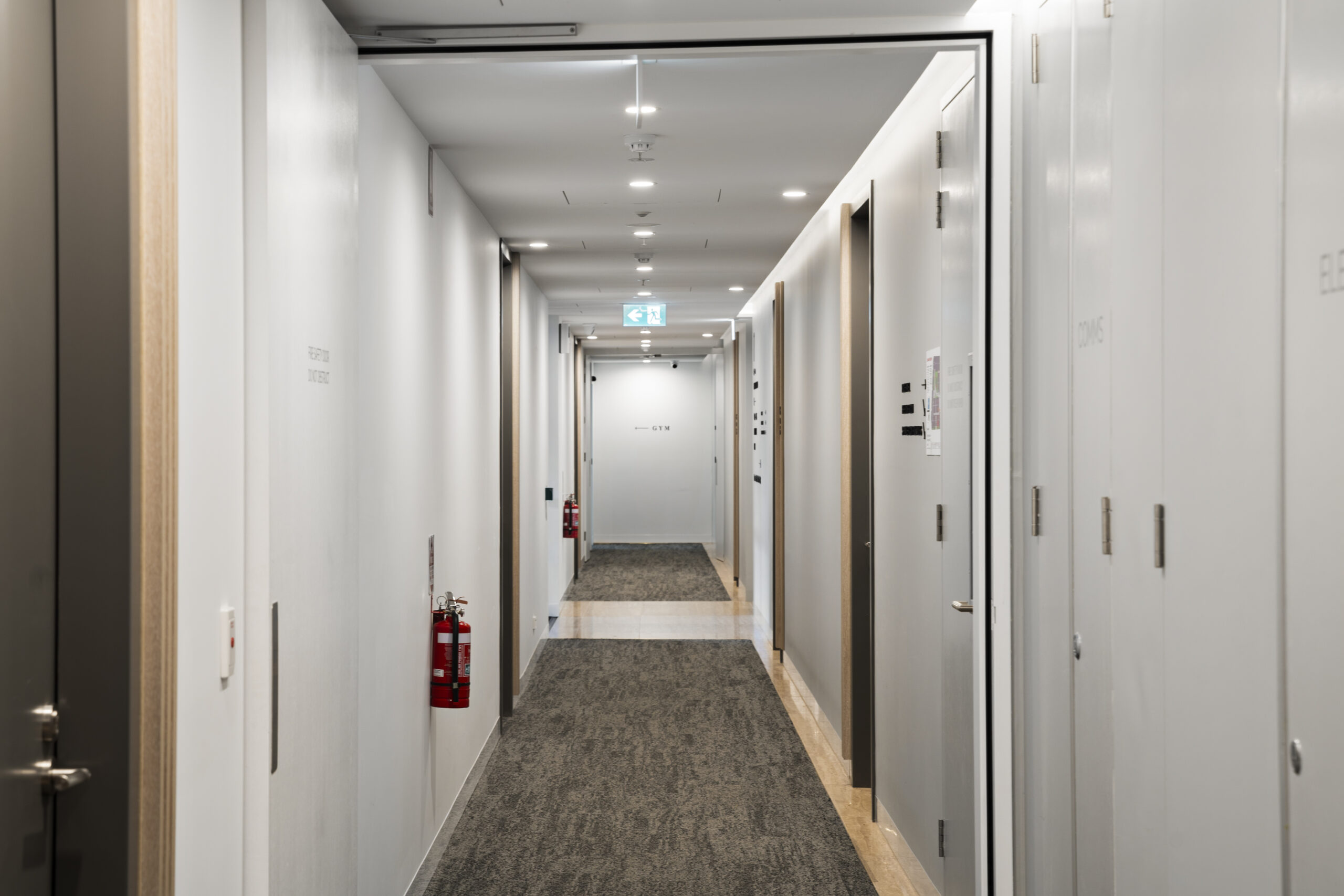
Fire Door Closers are one of the most important parts of a fire and smoke door assembly, yet they are often overlooked until something goes wrong.
Most people understand that a fire door is there to help slow the spread of fire and smoke. What is less understood is that the door can only do that job if it closes properly, every time. That is where the closer matters. If the closer is missing, damaged, poorly adjusted or disconnected, the door may stay open, close too slowly, fail to latch, or rebound after closing. In practical terms, that can undermine the protection the door was meant to provide.
A fire door is not just a slab of door leaf. It is a tested doorset made up of components that work together under fire conditions. That includes the frame, hinges, latch, seals and closer. The key Australian Standard covering fire-resistant doorsets is AS 1905.1:2015, while the National Construction Code fire door provisions set out how compliant fire doors fit within the broader building safety framework.
Why the closer is so important
The role of a fire door closer is simple but critical: it returns the door to the closed position after each use, with enough control and force for the latch to engage properly.
This matters because building safety cannot rely on occupants remembering to shut doors behind them in an emergency. A self-closing door helps preserve compartmentation, protect evacuation routes and reduce the movement of smoke into corridors, lobbies and stairwells. The NCC provisions relating to protection of openings exist for exactly this reason.
A door that only “mostly closes” is not performing properly. A door that closes but does not latch can also fail when exposed to pressure differences, impact, or the early movement of smoke and hot gases. In other words, closing and latching work together. If one fails, the assembly’s performance is compromised.
Common problems with fire door closers
In real buildings, closer-related defects are common. Some are obvious, while others are easy to miss during day-to-day use.
A closer may be leaking oil, loose on the frame, incorrectly sized for the door, or adjusted so softly that the door stalls before latching. In other cases, the closing action is too aggressive, causing the leaf to slam and bounce back open. Sometimes the closer has simply been disconnected because occupants found the door too heavy or inconvenient.
These issues may seem minor, but they create a point of failure in a system that is meant to operate reliably under pressure. A fire door that is routinely left open, or one that fails to return to the frame after normal use, should never be treated as a small maintenance issue.
Why “working correctly” matters just as much as being installed
It is not enough for a closer to be present. It must also be operating correctly.
A compliant installation is about more than attaching hardware to the door. The closer needs to suit the tested door assembly, be fitted correctly, and be adjusted so the door closes in a controlled way and latches without manual assistance. If the closer is fighting misalignment, poor maintenance, damaged seals or faulty latch hardware, the result may still be failure.
This is where misunderstanding often occurs. People may assume the door is compliant because it has a closer fitted. But a closer that does not return the door reliably to the fully closed and latched position is not delivering the safety outcome the system depends on.
The fire and smoke risk of a failed closer
When a fire door does not close properly, the opening it protects may no longer perform as intended.
That can allow smoke to move earlier and further than expected. In many emergencies, smoke is one of the greatest threats to life safety because it can reduce visibility, affect breathing and compromise escape paths well before direct flame spread reaches occupants. Fire doors play an important role in slowing that movement, but only when they are shut. The NCC’s requirements for fire resistance and protection of openings support that broader life safety objective.
This is especially important in shared residential buildings, commercial properties and other multi-occupancy environments, where a single faulty door can affect far more than one room.
Common misconceptions
One of the most common misconceptions is that a fire door only needs to be closed during a fire. In reality, it needs to be able to close automatically whenever it is used, because no one can predict exactly when conditions will change.
Another misconception is that propping a fire door open just for convenience is harmless if someone is nearby. It is not. If the door is open when it needs to contain smoke or fire, the safety function has already been lost.
A third misconception is that any standard door closer will do. Fire door hardware must align with the relevant fire door assembly requirements, and fire door compliance is tied to tested systems and recognised standards, not guesswork or convenience substitutions. That is why the requirements in AS 1905.1:2015 are so important.
What building owners and managers should watch for
If a fire door closer is working properly, the door should open, return smoothly, and latch consistently without slamming or sticking.
Warning signs include doors that drift shut too slowly, fail to latch, need to be pushed closed by hand, rebound after closing, scrape on the floor, or are routinely wedged open by occupants. Any of these can indicate that the closer, the latch, the frame alignment, or another part of the doorset needs attention.
The key point is simple: a fire door closer should not be judged by whether it is physically attached. It should be judged by whether the door performs properly in real use.
Fire and smoke doors are there to protect people when a building is under stress. The closer is what gives the door its ability to return to the closed position without relying on human behaviour.
That is why Fire Door Closers matter so much. When correctly selected, installed, adjusted and maintained, they help preserve compartmentation, protect escape paths and support the overall intent of the National Construction Code and AS 1905.1:2015. When they are missing, faulty or ignored, the door may no longer do the job it was installed to do.
In fire safety, small hardware failures can have large consequences. A working closer is not a finishing touch. It is a critical part of how the door protects life and property.