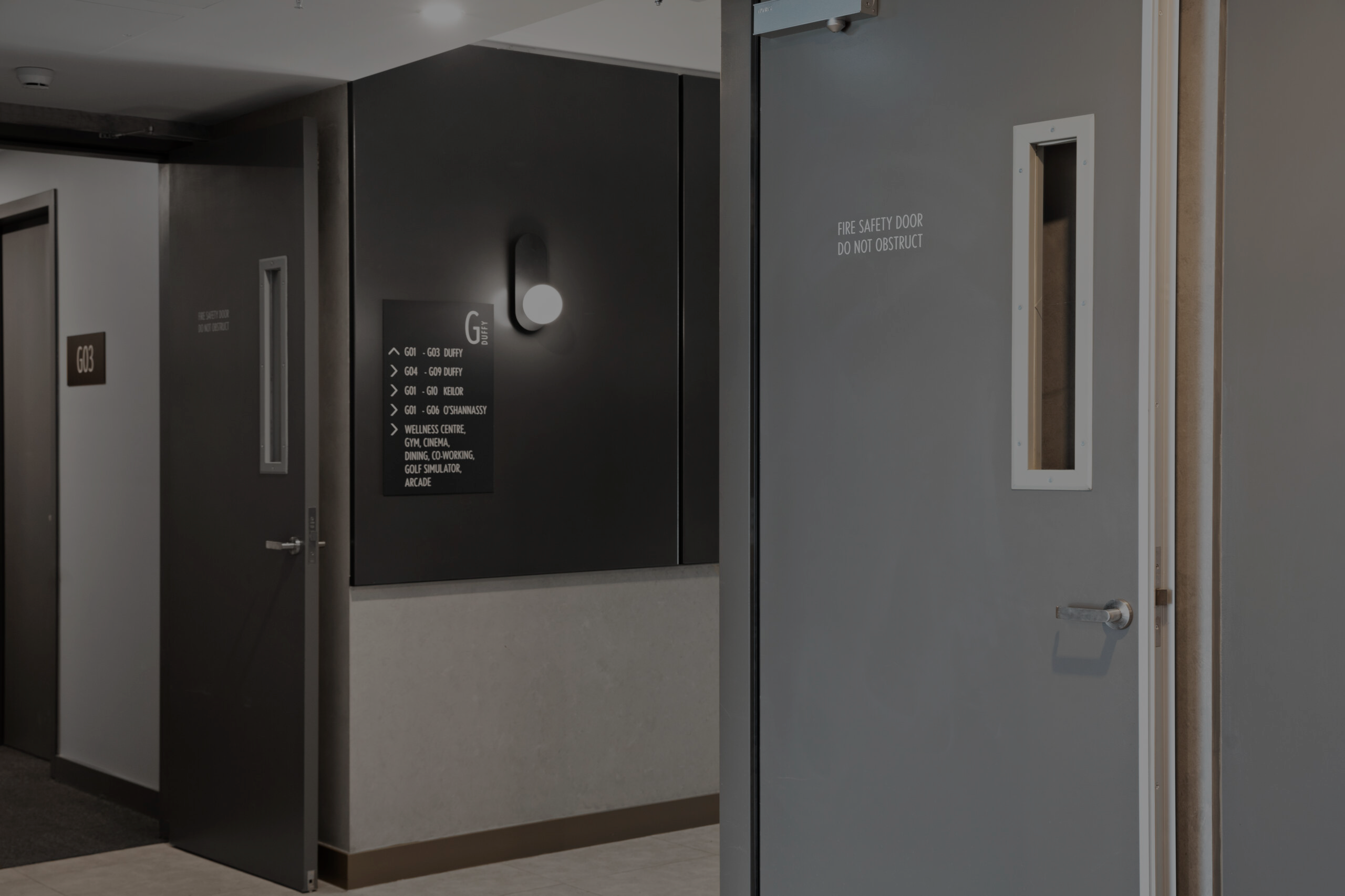
Door Frames
Fire Door Stops
Why Fire Door stops are always required to be 25mm and no less?
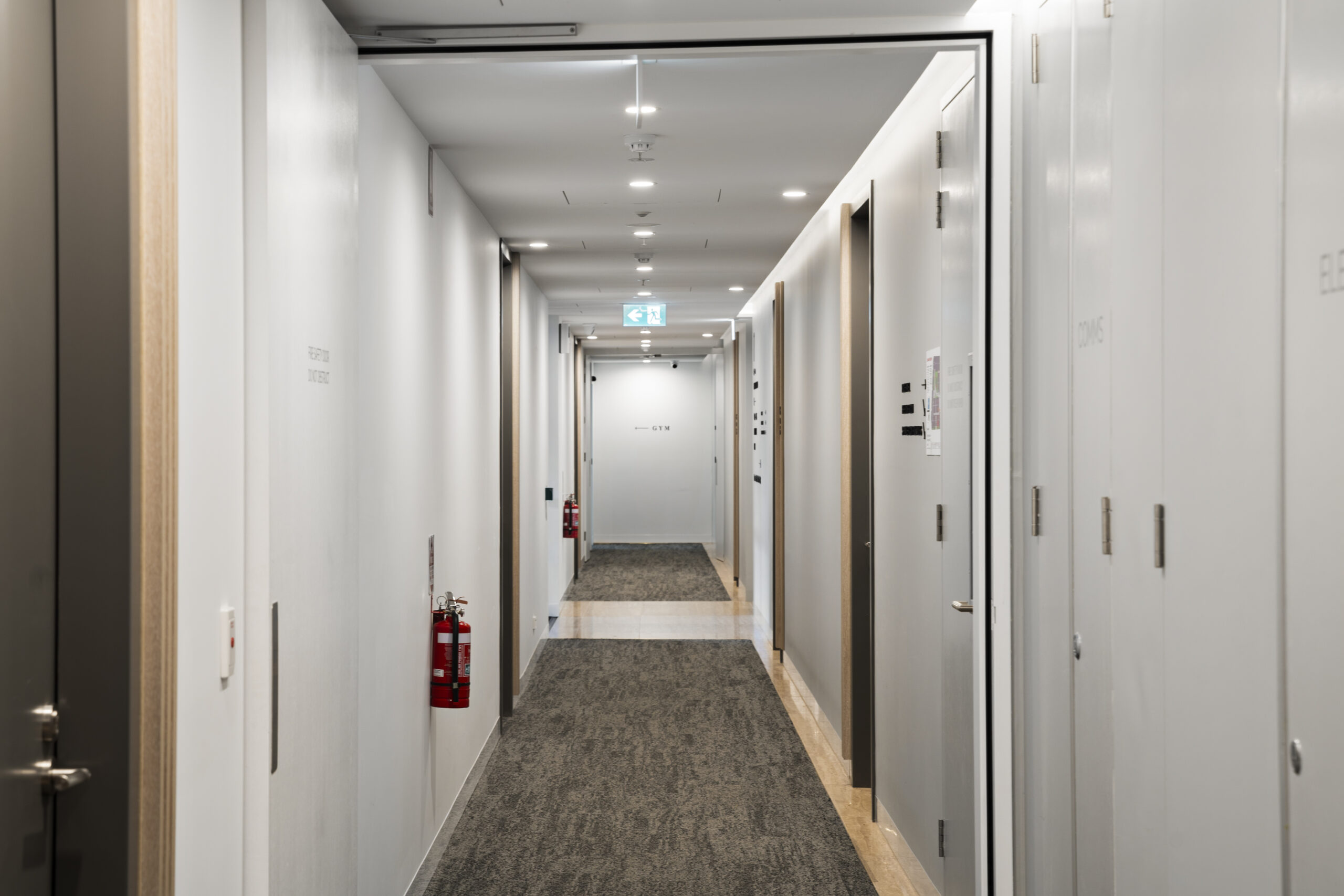
Smoke door seals only work when they actually seal the gap they are designed to protect.
That sounds obvious, but it is one of the most common issues seen on fire and smoke safety doors. A drop-down seal that stops short of the floor, or a brush seal that barely skims above the threshold, may look minor during a quick inspection. In practice, it can undermine the door’s purpose by allowing smoke to pass underneath the leaf far earlier than intended.
For occupants, smoke is often the more immediate danger in a fire. It reduces visibility, affects breathing, and can quickly compromise escape paths. That is why smoke control around doors matters so much. A door leaf, frame and hardware may all appear substantial, but if the bottom edge remains open, smoke has a direct path through.
Australian compliance requirements recognise the importance of properly constructed fire doors and smoke doors. The National Construction Code (NCC) Specification 12 directs compliance for fire doors and smoke doors to the relevant Australian Standards, including AS 1905.1:2015 for fire-resistant doorsets and AS 6905 for smoke doors. These requirements exist to support compartmentation and safer egress conditions, not simply to satisfy a checklist.
The gap at the bottom matters more than many people realise
Smoke does not need a large opening to spread. Even a relatively small gap beneath a door can become a weak point between compartments.
This is why bottom smoke seals are so important. Whether the seal is a mechanical drop-down type or a brush-type arrangement used as part of an approved system, it must make effective contact with the floor, threshold, or nominated sealing surface when the door is in its closed position. If it does not, the seal is not completing the barrier it was intended to provide.
In simple terms, the door may be shut, but it is not sealed.
That distinction matters. A closed door without effective smoke sealing can still allow smoke migration from one area to another. In an emergency, that can affect corridors, lobbies, sole-occupancy units, plant areas, or other spaces that rely on smoke separation to buy time and support safer movement of occupants.
Drop-down seals are only effective when adjusted correctly
Drop-down seals are often chosen because they retract when the door is opened and engage when the door closes. Used correctly, they can be an effective solution. But they are also highly dependent on correct installation and adjustment.
If the operating button is not properly set against the frame, the seal may deploy too late, too lightly, or not at all. If the door has dropped, the floor level changes across the opening, or the wrong seal has been selected for the gap, the result can be the same: no meaningful contact at the bottom edge.
A common misconception is that “close enough” is acceptable because the seal is visibly present. It is not the presence of the seal that matters. It is the performance of the seal in the closed position.
Brush seals still need real contact
Brush-type smoke seals are sometimes misunderstood because they can appear softer or more forgiving than a drop-down seal. But they still need to contact the threshold or floor surface as intended by the tested system or manufacturer’s instructions.
If the brush is trimmed too short, installed too high, worn out, bent over, or damaged by cleaning equipment and trolley traffic, it may stop functioning as a smoke barrier. A visible brush line under the door is not enough. It needs to sit correctly and continuously across the opening so it can limit air and smoke movement.
This is particularly important where the door serves a smoke separation function rather than just a general access purpose.
Why poor contact happens
In many buildings, smoke seals lose effectiveness gradually rather than all at once.
The cause might be poor initial installation. It might also be later movement in the building, a door leaf that has dropped on its hinges, a threshold change after floor finishes were replaced, or maintenance work that altered the relationship between the leaf and floor. In other cases, the seal itself is the wrong product for the opening.
Damage is also common. Bottom seals are exposed to regular traffic, impacts, cleaning, moisture and wear. Once a seal starts dragging incorrectly or catching on the floor, someone may trim it, bend it back, or simply leave it as-is. That usually solves nothing and often creates a bigger compliance problem.
Why this matters for compliance and life safety
Fire and smoke door assemblies are not random collections of parts. They are systems. Their performance depends on the door leaf, frame, hardware, seals and installation working together as intended. The NCC Specification 12 and the relevant standards, including AS 1905.1:2015 and AS 6905, make that clear.
That means a bottom smoke seal should never be treated as an optional extra or cosmetic accessory. If it forms part of the required smoke control performance, it needs to be present, appropriate, and functioning properly.
From a practical perspective, a smoke seal that does not contact the floor may contribute to smoke spread at the very moment the door is relied upon most. That is the real issue. Compliance matters because performance matters.
What building owners and managers should look for
A simple visual check can identify obvious defects:
These signs do not always confirm the full extent of non-compliance, but they are strong indicators that the doorset should be assessed.
The right response is not guesswork
The solution is not to add a random aftermarket strip or pack the gap with whatever is available. Any repair or replacement should suit the doorset, the fire or smoke performance required, and the relevant tested or manufacturer-backed arrangement.
This reflects the project requirement that articles explain compliance issues in a simple, professional and easy-to-understand way, with subtle alignment to Sentry’s clear, supportive and thorough tone.
When a fire or smoke safety door is closed, the bottom seal should finish the job. If a drop-down or brush seal is not making proper contact with the ground, the door may be closed, but it is not doing all the work it was designed to do.