
Fire Safety Doors
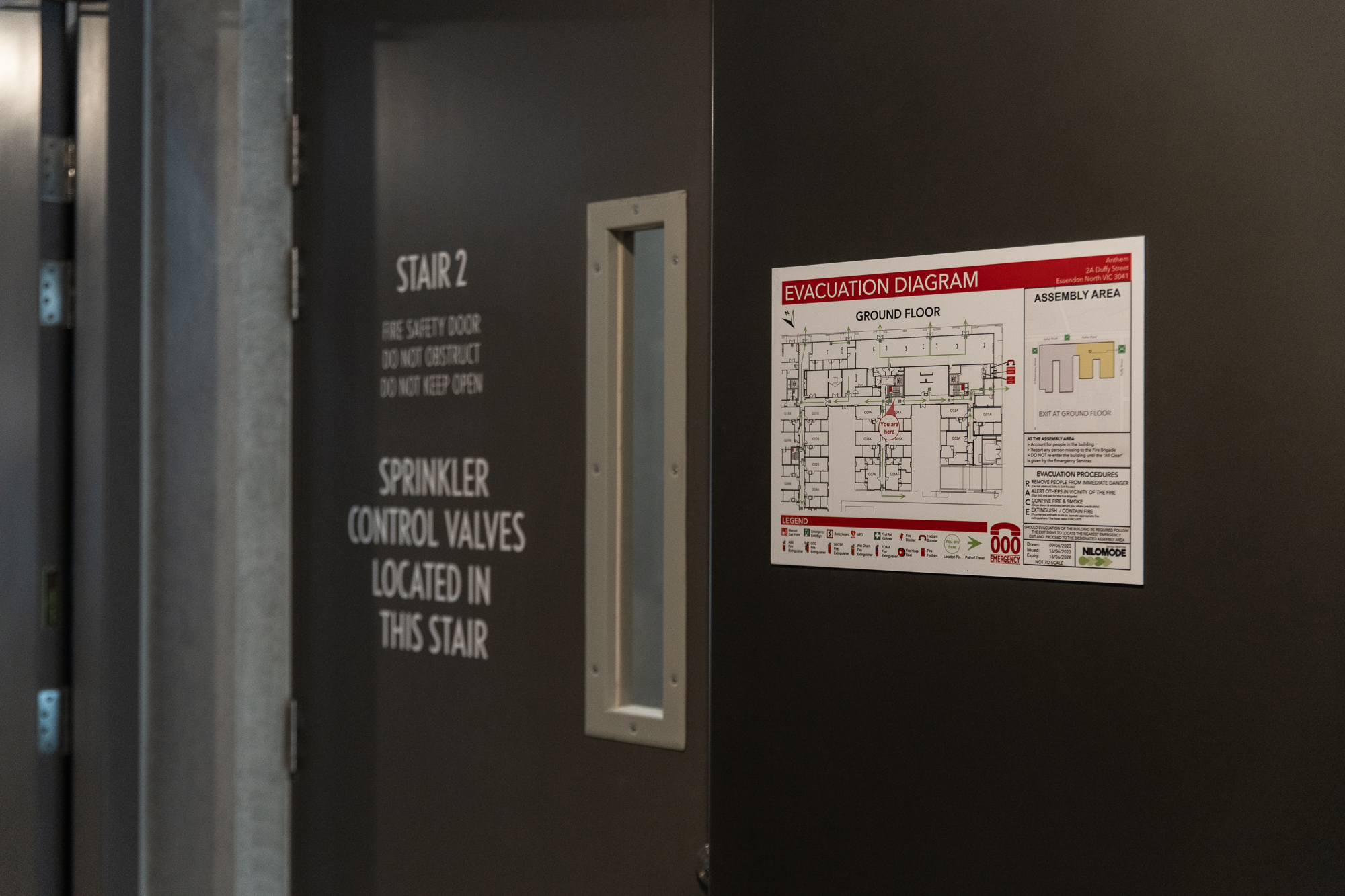
Fire door tags are small pieces of hardware, but they carry a big compliance role. When they are missing, mismatched, painted over or installed incorrectly, it becomes much harder to confirm what the door assembly actually is, what it was tested to, and whether it can be relied on as part of the building’s fire protection.
That matters because a fire door is not just a door leaf on its own. Under the National Construction Code and NCC Specification 12 for fire doors and smoke doors, required fire doors must comply with AS 1905.1. The standard treats the door leaf, frame, hardware and installation as a complete doorset, not as separate fire-rated items that can be mixed and matched at will.
In simple terms, if the tags do not tell a clear and consistent story, the door assembly becomes harder to trust, harder to inspect and harder to verify.
Why the tags matter
One of the most common misunderstandings in buildings is the idea that the frame has one fire rating, the door leaf has another, and someone can work out compliance from the pieces. That is not how fire door compliance works.
AS 1905.1 makes it clear that the fire-resistance level applies to the complete doorset, and the NCC relies on compliant fire doors as tested and installed assemblies. That is why identification tags are so important. They help confirm that the frame and leaf belong to the same tested system, and that the assembly can be assessed against the required FRL for its location in the building.
1. The door and frame tags do not match
This is one of the biggest red flags. If the frame shows one FRL and the leaf shows another, or if the identifiers suggest the components do not belong together, there is immediate uncertainty around the actual performance of the doorset.
That uncertainty is a real issue. The frame tag is meant to identify the FRL of the entire doorset, not just the frame. If the tags conflict, you may no longer be able to prove what the installed assembly was tested and certified as. For owners, managers and contractors, that can quickly become a defect that needs further investigation rather than assumption.
2. Tags are missing from both the leaf and frame
Where both tags are absent, the problem is even more serious. Under AS 1905.1, metal FRL tags are required on the frame and on the leaf, and each tag carries specific identifying information about the tested doorset and its manufacturer or certifier. Without those tags, key information is lost.
In practice, missing tags can leave building managers unable to verify the door’s identity during inspections, audits or defect rectification works. It can also make future maintenance far more complicated because the original assembly details are no longer obvious.
3. The leaf tag is missing
A missing leaf tag might look minor at first glance, but it is not. The door leaf tag is intended to identify the tested standard, FRL, manufacturer, certifier, year of manufacture and the unique doorset number. If that tag is gone, one half of the assembly’s identity is missing.
This becomes especially problematic where doors have been repaired, replaced, re-skinned or altered over time. Without the tag, it may be difficult to prove that the installed leaf is the correct component for that specific fire-rated assembly.
4. The frame tag is missing
The frame tag matters just as much. AS 1905.1 requires the frame tag to be fixed to the inside of the frame and to identify the tested doorset information, including the relevant FRL. If the frame tag is absent, the installed frame can no longer be readily tied back to the complete tested assembly.
This is where people often make risky assumptions. A frame may look substantial, but appearance is not proof of compliance. If the identifying tag is missing, the evidence chain is weaker.
5. Tags have been painted over or made illegible
This is another common issue in existing buildings. During repainting or refurbishment works, FRL tags are sometimes coated over, filled, or otherwise obscured. Once the information is no longer legible, the practical value of the tag is lost.
That creates a maintenance problem as well as a compliance problem. Routine servicing of fire protection systems under AS 1851-2012 depends on being able to inspect and identify the fire door assembly properly. If the tag cannot be read, the technician’s ability to verify the doorset is compromised.
6. Tags are the wrong way around
A less obvious but still important defect is when the tags have effectively been swapped or installed incorrectly. For example, the leaf tag may not contain the serialised information expected for the door leaf, or the frame carries details that should identify the leaf.
That matters because the tags are not interchangeable labels. Each serves a specific identification purpose under AS 1905.1. If they are installed the wrong way around, the assembly record becomes confusing and the door may fail a detailed compliance inspection even if the physical components appear intact.
Why this should never be treated as “just a tag issue”
A painted-over plate or a missing tag can seem administrative. It is not. Fire door identification is part of proving that the installed assembly is the correct one for the opening it protects.
When a public authority, building surveyor, insurer or maintenance contractor reviews a fire door, they need to be able to identify what has been installed. If the tags are missing, mismatched or unreadable, the building owner may be left with uncertainty at exactly the point where certainty is required.
That is also why tag defects should be addressed early. Leaving them unresolved can turn a relatively contained compliance issue into a bigger question about the entire doorset.
If you manage, own or maintain a building, fire door tags should be treated as part of the essential compliance picture, not as an afterthought. The leaf and frame tags should both be present, legible, correctly installed and consistent with one another.
Where they are not, the safest approach is to have the doorset reviewed properly rather than guessed at. In fire safety, assumptions are rarely your friend. Clear identification supports clear compliance, and clear compliance helps protect people, property and peace of mind.